WILDLIFE INDIA
HOME : National Parks India :
Ranthambore National Park |
||||||||||||||||||
RANTHAMBORE NATIONAL PARK 
About Ranthambore National Park The park, set against the backdrop of the historic 1000-year-old Ranthambore Fort, lies in the area where the ancient ranges of the Vindhyas' flat-topped hills merge with the sharp ridges of the Aravalis. The park's uniqueness lies in its man-made lakes and ancient reservoirs, which have merged into the natural system as vital sources of water. 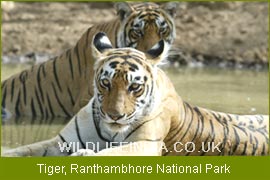 Ranthambore also has a large populaton of panthers, the second largest predators of the forest. Marsh Crocodiles abound in the lakes and Gharial can be spotted close by in the Chambal River, which also harbors the Gangetic Dolphin. An open jeep safari also affords a glimpse of the spectacular ruins of mosques, tombs, watchtowers and palaces scattered within the park. Undoubtedly the best place to observe tigers in the wild, the park also has a host of other predators such as the Caracal, Leopard, Sloth Bear and Jungle Cat. The prey species includeSambhar , Chital, Nilgai, Chinkara and the Wild Boar. The protected Blackbuck can be seen in fields close to the reserve. Scavengers like Striped Hyena, Jackal, Mongoose and the Common Fox are also seen here. The Common Langur surely lives up to its name. Of the 300 species of birds reported at Ranthambore, the prominent ones are Variable Wheatear, Tickell's Blue Flycatcher, Rufus-tailed Shrike, Sirkeer Malkhoa, Painted Spurfowl, Blue-breasted Quail and Rain Quail. Raptors include Lesser Spotted Eagle, Bonelli's Eagle, Changeable Hawk Eagle and owls such as the Brown Fish Owl and Collared Scops Owl. In the areas adjoining the park, one can spot the Greater Flamingo, Demoiselle Crane, Kentish Plover, Yellow Wattled Lapwing, Brown-headed Gull, Ruff and the Indian Courser. The vegetation is typically dry deciduous forest and moderate to scanty undergrowth in flat valleys. The reserve has a rich faunal assemblage and the scanty undergrowth allows opportunities for good game viewing Other Attractions In Ranthambore Ranthambore Fort & Jogi Mahal : With a coverage area of 392-sq-kms, this park got its name from the Ranthambore Fort, which sits on a rocky outcrop in the heart of the Park. The fort, which dates back to the 10th century and is probably the oldest existing fort in Rajasthan, was a vital citadel for control of Central India and particularly the Malwa plateau. The entry point to the Ranthambore National Park, goes straight to the foot of the fort and the forest rest house, Jogi Mahal. The latter boasts of the second-largest Banyan tree in India. Padam Talao : The Padam Talao is a large lake in Ranthambore National Park. It gets its name from the lotus flowers that bloom in the lake. The Padam Talao is a favorite watering hole of the animals of Ranthambore.. The hunting lodge called Jogi Mahal is situated on the banks of the Padam Talao. 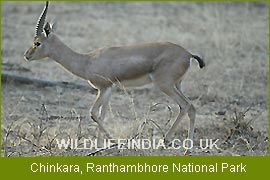 Rajbagh Talao : The second of the three lakes in Ranthambore in size, the Rajbagh Talao has ruins that extend to the edge of the lake. The lake is often ringed with animals drinking from its banks. The water plants in the lake provide the Sambhar with vegetation to graze on. Malik Talao : The Malik Talao is the littlest in surface area of the three lakes in Ranthambore National Park. It is best known for its many species of birds seen on its banks and within the lake. Kingfishers, egrets, herons, ibis, storks and cranes can be seen around the Malik Talao. Watch out for the crocodiles in the Malik Talao. Wildlife Safari Timing Winter Timing Timings for entry into, and exit from, the park vary according to the season. In winters, due to the shorter duration of daylight hours, the morning entry time is later and evening exit time is earlier Entry : Morning Safari: Sunrise till 1030 hrs Evening Safari: 1500 hrs till 1730 hrs: Summer Timings: Entry: Morning Safari: Sunrise till 0930 hrs Evening Safari: 1600 hrs till 1830 hrs How to reach Ranthambore National Park Air : Jaipur, the capital of Rajasthan, is the nearest airport to Ranthambore. Ranthambore National Park is about 140 Km from Jaipur. You can fly to Jaipur and proceed to Sawai Madhopur by road or rail. Rail : Sawai Madhopur which is just 11 Km from Ranthambore National Park is accessible by rail and is on the main trunk route from Delhi to Mumbai. You can arrive at Sawai Madhopur by rail and take a car or bus to Ranthambore National Park . Road : A good network of buses connect Sawai Madhopur, the nearest town from Ranthambore to all the major cities within the state of Rajasthan. Distance by road: Delhi - 480 km (via Dausa), Jaipur - 180 km (via Tonk) 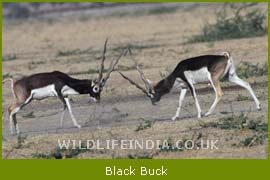 Surrounded by Vindhys and the Aravalli, admist vast, arid and denuded tracts of the desert ecology of Rajsathan. In 1972 the sanctuary ca,e under project tiger scheme. Ranthanmbore soared over an area of 392 Sq. Kms of thick forest with nullaha and waterfalls. The herbivores populaton includes Chital,Sambhar , Blue bull, Chinkara, Deer. Wild boar & langhur (monkeys) are common sights. The Tiger is the biggest attraction of the park, other carnivours in park include leopard, hyena, Jacka, fox, caracal, Jungle cat & Ratel. Around 80 sloth bears are known to exist in the park. The Park has more than 300 varieties of birds. Park open from October-June. From Delhi you can board an overnight train to get down at Swaimadhopur (10 Kms). SUGGESTED TOURS » Ranthambore Weekend Getaway » Best of 2 with Tigers » Golden Triangle with Tigers SUGGESTED RESORTS » Ranthambore Regency RANTHAMBORE NATIONAL PARK RESERVATION FORM
|
||||||||||||||||||


 Bharti SoftLand