WILDLIFE INDIA
HOME : Birding Tours India : Birding in Goa |
BIRDING IN GOA  Duration : 8 nights / 9 days Places Covered : Goa Goa situated on the West Coast of India, bestowed upon  by
innumerable gifts of nature: picturesque landscapes, golden beaches, hills,
plateaus, estuaries, salt pans, saline and fresh water marshes, mangroves. Its
hills are dotted with plantations of many types of cash crops i.e. cashew, coconut,
spices, fruits, etc. by
innumerable gifts of nature: picturesque landscapes, golden beaches, hills,
plateaus, estuaries, salt pans, saline and fresh water marshes, mangroves. Its
hills are dotted with plantations of many types of cash crops i.e. cashew, coconut,
spices, fruits, etc. Goa is also home to many species of endemic birds. With one National Park and six wildlife sanctuaries, Goa is a birders paradise. One expert in his studies on birds of Goa has recorded as many as 382 species of birds in the entire Goan region. Topographically Goa has three distinct types of terrain (A) the coastal belt which has many beaches, bays interspersed by the estuaries of Zuari and Mandovi rivers (B) the middle region covered mostly by plantations & some patches of Semi Evergreen Forest (C) The Western Ghats also known as the Sahaydris bordering the neighbouring state of Karnataka covered mostly by Tropical Wet Evergreen and Tropical Moist Deciduous Forests, all offering very good birding areas. For our birding trips we will be mainly concentrating on the areas situated in and around Goa, mainly the estuaries, creeks, marshes, plantations & hills. Most of the places will be within walking distance from the hotel or will be a short driving distance. The itineraries are quite flexible and can be changed according to the prevailing conditions. Day 01: Goa Arrive Goa and drive to your hotel located in North Goa. 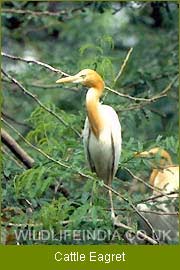 Your hotel during your stay is famous within the birding fraternity and offers
ideal birding right from its premises itself. Some of the birds easily sighted
from the hotel are- Watercock, Ruddy-breasted Crake, White-breasted Waterhen,
Common Snipe, Wood Sandpiper, Red-wattled Lapwing, Great Egret, Cattle Egret,
Indian Pond Heron, Black-crowned Night Heron, Pintail Snipe, White-bellied Sea
Eagle, Eurasian Marsh Harrier, Black and Brahminy Kites, Pallid Harrier, Marsh
Harrier, Common Buzzard, Oriental Honey Buzzard, Osprey, Shikra, Crested Goshawk,
Red-rumped Swallow, Asian Palm Swift, Indian Swiftlet, Black-capped, Common
and White-throated Kingfishers, Green and Blue-tailed Bee-eaters, Asian Koel,
Rose-ringed Parakeet, Plum-headed Parakeet, Spotted Owlet, Oriental Turtle Dove,
Long-tailed Shrike, Black Drongo, Asian Paradise Flycatcher, Bluethroat (White
spot), Oriental Magpie Robin, Rosy Starling, Chestnut-tailed Starling, Jungle
and Common Mynas, Siberian Stonechat, Blyth’s Reed Warbler, Clamorous Reed
Warbler, Ashy Prinia, Red-vented Bulbul, White rumped and Scaly-breasted Munias,
Malabar Lark, Ashy Wood Swallow, White-browed Wagtail, Yellow Wagtail and Baya
Weaver. Your hotel during your stay is famous within the birding fraternity and offers
ideal birding right from its premises itself. Some of the birds easily sighted
from the hotel are- Watercock, Ruddy-breasted Crake, White-breasted Waterhen,
Common Snipe, Wood Sandpiper, Red-wattled Lapwing, Great Egret, Cattle Egret,
Indian Pond Heron, Black-crowned Night Heron, Pintail Snipe, White-bellied Sea
Eagle, Eurasian Marsh Harrier, Black and Brahminy Kites, Pallid Harrier, Marsh
Harrier, Common Buzzard, Oriental Honey Buzzard, Osprey, Shikra, Crested Goshawk,
Red-rumped Swallow, Asian Palm Swift, Indian Swiftlet, Black-capped, Common
and White-throated Kingfishers, Green and Blue-tailed Bee-eaters, Asian Koel,
Rose-ringed Parakeet, Plum-headed Parakeet, Spotted Owlet, Oriental Turtle Dove,
Long-tailed Shrike, Black Drongo, Asian Paradise Flycatcher, Bluethroat (White
spot), Oriental Magpie Robin, Rosy Starling, Chestnut-tailed Starling, Jungle
and Common Mynas, Siberian Stonechat, Blyth’s Reed Warbler, Clamorous Reed
Warbler, Ashy Prinia, Red-vented Bulbul, White rumped and Scaly-breasted Munias,
Malabar Lark, Ashy Wood Swallow, White-browed Wagtail, Yellow Wagtail and Baya
Weaver. Day 02: Goa Early morning leave for birding at the Baga Hills a short distance from the hotel. Breakfast will be served in the field itself in order to maximize the birding time. We can expect to see beautiful Purple-rumped Sunbird and Loten’s 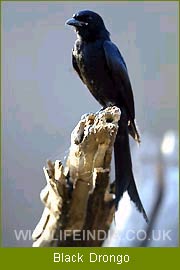 sunbird,
Indian Robin, Crested Goshawk, Booted Eagle, Bronzed Drongo, Asian Paradise
Flycatcher, Asian Brown Flycatcher, Greenish Warbler, Sea Eagle, Spotted Dove,
Common Iora, Long tailed Shrike, Greater Coucal, Coppersmith Barbet, Black Headed
Munia. Black-rumped Flameback, Rufous Treepie, Nilgiri Blackbird, Oriental Honey
Buzzard, Puff-throated Babbler, White-browed Bulbul, Ashy Prinia, White-bellied
Sea Eagle, Black and Brahminy Kites, Red-whiskered Bulbul, Western Reef Egret
and Indian Bushlark. Late afternoon can be spent watching birds at the wetlands
adjacent to the hotel from the hotel premises itself. One can spot White-bellied
Sea Eagle, Eurasian Marsh Harrier, Black and Brahminy Kites, Pallid Harrier,
Marsh Harrier, Common Buzzard, Oriental Honey Buzzard, Osprey, Shikra, Crested
Goshawk, Siberian Stonechat, Blyth’s Reed Warbler, Clamorous Reed Warbler,
Ashy Prinia, Red-vented Bulbul, White rumped and Scaly-breasted Munias. sunbird,
Indian Robin, Crested Goshawk, Booted Eagle, Bronzed Drongo, Asian Paradise
Flycatcher, Asian Brown Flycatcher, Greenish Warbler, Sea Eagle, Spotted Dove,
Common Iora, Long tailed Shrike, Greater Coucal, Coppersmith Barbet, Black Headed
Munia. Black-rumped Flameback, Rufous Treepie, Nilgiri Blackbird, Oriental Honey
Buzzard, Puff-throated Babbler, White-browed Bulbul, Ashy Prinia, White-bellied
Sea Eagle, Black and Brahminy Kites, Red-whiskered Bulbul, Western Reef Egret
and Indian Bushlark. Late afternoon can be spent watching birds at the wetlands
adjacent to the hotel from the hotel premises itself. One can spot White-bellied
Sea Eagle, Eurasian Marsh Harrier, Black and Brahminy Kites, Pallid Harrier,
Marsh Harrier, Common Buzzard, Oriental Honey Buzzard, Osprey, Shikra, Crested
Goshawk, Siberian Stonechat, Blyth’s Reed Warbler, Clamorous Reed Warbler,
Ashy Prinia, Red-vented Bulbul, White rumped and Scaly-breasted Munias. Day 03: Goa Today morning we leave for Baga Forest – an area of scrubland and forest which has some fairly good species of birds to be seen. - White-browed, Red Whiskered and Red-vented Bulbuls. Jungle and Dark-fronted Babblers, Common Woodshrike, Bar-winged Flycatcher Shrike, Purple Sunbird, Brown-cheeked Fulvetta, Small Minivet, White-bellied Drongo, 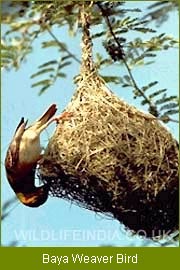 Crimson-backed
Sunbird, White-throated FantailWhite-bellied Sea Eagle, Oriental Honey Buzzard,
Oriental Scops Owl, Black-rumped Flameback, Yellow-crowned Woodpecker., Purple-rumped
Sunbird, Spotted Dove, Plum-headed Parakeet, Common Iora, Thick-billed Flowerpecker,
White-rumped Munia, Black-headed Cuckooshrike, Eurasian Golden Oriole, and Black-lored
Tit. Afternoon take a walk towards the Baga River to see some species of birds
from close quarters. One can be lucky to birds like White-cheeked Barbet, Richards,
Blyth’s and Paddyfield Pipits, Pied Bushchat, Common Sandpiper, Little
Ringed Plover, Asian Palm Swift, White-throated Kingfisher, Spotted Owlet, Oriental
Skylark, Short-toed Lark, Common and Jungle Mynas, Long Tailed Shrike, Pintail
Snipe, White-breasted Water Hen, Brown Shrike, Hoopoe, Tree Pipit, Indian Roller,
Common Kestrel, Green Warbler, Osprey. Crimson-backed
Sunbird, White-throated FantailWhite-bellied Sea Eagle, Oriental Honey Buzzard,
Oriental Scops Owl, Black-rumped Flameback, Yellow-crowned Woodpecker., Purple-rumped
Sunbird, Spotted Dove, Plum-headed Parakeet, Common Iora, Thick-billed Flowerpecker,
White-rumped Munia, Black-headed Cuckooshrike, Eurasian Golden Oriole, and Black-lored
Tit. Afternoon take a walk towards the Baga River to see some species of birds
from close quarters. One can be lucky to birds like White-cheeked Barbet, Richards,
Blyth’s and Paddyfield Pipits, Pied Bushchat, Common Sandpiper, Little
Ringed Plover, Asian Palm Swift, White-throated Kingfisher, Spotted Owlet, Oriental
Skylark, Short-toed Lark, Common and Jungle Mynas, Long Tailed Shrike, Pintail
Snipe, White-breasted Water Hen, Brown Shrike, Hoopoe, Tree Pipit, Indian Roller,
Common Kestrel, Green Warbler, Osprey.Day 04: Goa We leave early morning for birding at Bondla Wildlife Sanctuary. The drive will take around 2 hrs. This sanctuary has many paths for the birders to watch the birds. Some of the species spotted in this sanctuary are: Booted Eagle, Black-crested and Yellow browed Bulbuls, Black-naped Monarch, Bar-winged Flycatcher Shrike, Golden-fronted Leafbird, Blue-capped Rock Thrush, Western Crowned Warbler, Large-billed Leaf Warbler, Asian Paradise Flycatcher, Malabar Whistling Thrush, Brown cheeked Fulvetta, Oriental Honey Buzzard, Oriental Magpie Robin, Red-rumped Swallow, Indian Swiftlet, Asian Palm Swift, Malabar Grey Hornbill, Emerald Dove, Pompadour Green Pigeon, White breasted Drongo, Tickell’s Blue Flycatcher, Heart-spotted Woodpecker, Nilgiri Blackbird, White-bellied Blue Flycatcher. Afternoon we visit the Carambolim Lake- a large expanse of water where you can see waders and ducks in thousands. Some of the species which can be seen are Lesser Whistling Duck, Cotton Pygmy-goose, Comb Duck, Marsh Harrier, Purple Heron, Purple Swamphen, Bronze-winged and Pheasant-tailed Jacana, Ashy Wood-swallow, Pintail, Common and Pintail Snipe, Asian Openbill. Day 05 – Day 07: Goa 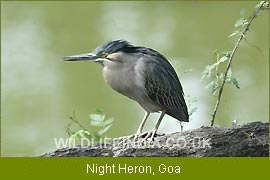 Today morning we leave for our home for next 3 days. The drive will be quite scenic with stopovers for birding enroute. One can see, Large Woodshrike, Crested Treeswift, Scarlet Minivet Black Bulbul, Asian Fairy Bluebird and Brown-cheeked Fulvetta. If lucky we may also see some rare species like Brown-breasted Flycatcher or Western Crowned Warbler. The road will climb through the Tropical Wet Evergreen forests and finally we reach our destination nestled in the Swapnagandha valley, amidst thick expanse of forest tracts at 800mtrs above sea level, overlooking the Vazra falls and the entire panoramic view of Goa. – The Wildernest. The stay at the camp will be in Eco-friendly huts made out of acacia wood with rare amalgamation of first class ecotel comfort machans with the rustic beauty of village hut. Built in the recesses of thick forest and yet adhering to safety norms of all kind, they provide you a glimpse of the natural world at its closest. The Wildernest has some very excellent foot trails specially developed for enthusiastic bird watchers. 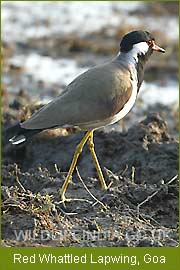 The camp has also specially created Machans andhides for you to watch the birds and other wildlife from close quarters at dusk and dawn. You can also interact with the resident naturalist who will be keen to share his knowledge with you not only on birds but on insects, reptiles, butterfly etc. The campus of the camp and the surrounding forests hold limitless opportunities for birding and make things easier some water holes have been created in the thick forest adjacent to the camp. Some of the bird species documented by the resident naturalistare: Blackwinged kite, Black kite, Brahminy kite, Shikra, White eyed buzzard eagle, Crested hawk eagle, White-rumped vulture, Crested serpent eagle, Grey francolin, Jungle bush quail, Grey Jungle fowl, Red-wattled lapwing, Pompadour green pigeon, Spotted dove, Emerald dove, Rose ringed parakeet, Common hawk – cuckoo, Asian koel, Greater coucal, barn owl, brown fish owl, spotted owlet, Grey nightjar, Indian nightjar, common kingfisher, chestnut headed bee eater, Indian Grey hornbill, Malabar Grey hornbill, Malabar pied hornbill, Brown headed barbet, Rufous woodpecker, Blackrumped flameback, Indian pitta, Euraian golden oriole, Haircrested drango, Greater racket- tailed drongo, Jungle myna, rufous tree pie, black headed cuckoo – shrike, common iora, goldenfronted leaf bird, greyheaded bulbul, redwhiskerd bulbul, redvented bulbul, jungle babbler, Tickkell’s blue flycatcher, Asian paradise flycatcher, pied bushchat, Indian robin, Malabar whistling thrush, Great tit, Plain flowerpecker, Purple rumped sunbird, Crimson backed sunbird Scalybreasted munia. Day 08: Goa 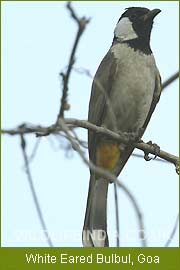 Today morning we drive back to Goa, on the way taking short stops for birding enroute. Afternoon we visit the Mayem Lake for adding some more birds to our tally. The lake does not holds much promise in regard to the birding but the surrounding forest has some fair number of birds for spotting. The birds some of which you can see are: Changeable Hawk Eagle, Crested Serpent Eagle, Red-wattled Lapwing, Brown Fish Owl, Rufous Woodpecker, Common Woodshrike, Stork-billed, White-throated and Common Kingfishers, Jerdon’s Nightjar, Crested Tree Swift, Orange-breasted Green Pigeon, Ashy Wood Swallow, Eurasian Golden Oriole, Hooded Oriole, Black-hooded Oriole, Red-vented and Red-whiskered Bulbuls, Asian Koel, Small Minivet, Verditer Flycatcher, Asian Paradise Flycatcher, Coppersmith and White-cheeked Barbets, Common Iora, Nilgiri Blackbird, Purple-rumped and Purple Sunbirds, Ashy Drongo, Golden-fronted Leafbird, Blyth’s Reed and Greenish Warblers. Late evening return to the hotel for tallying notes. Day 09: Goa Depart Goa: Transfer to airport for flight back home. BIRDING IN GOA RESERVATION FORM |


 Bharti SoftLand